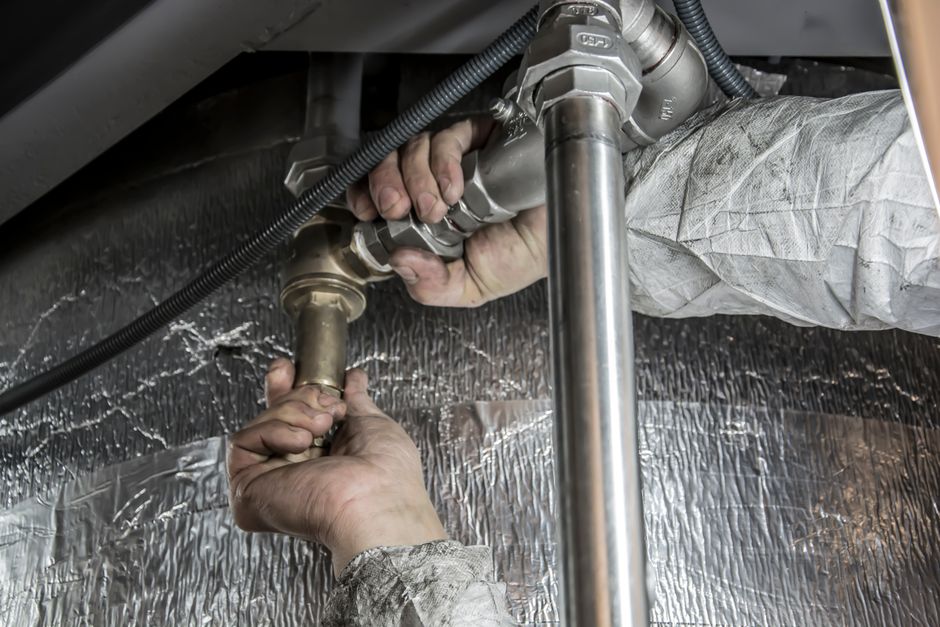
Austin has spent the last two decades becoming one of the most talked-about cities in the country. The tech companies moved in, the neighborhoods filled up, and the population keeps climbing — which means plumbing demands that range from brand-new construction in the outer suburbs to aging cast iron lines under mid-century homes in Hyde Park and Travis Heights. Throw in Highland Lakes hard water that turns your water heater into a calcium quarry, expansive clay soils that shift under your foundation year after year, and the ghost of Winter Storm Uri still haunting homes across Central Austin — and you have a city where knowing a reliable plumber in Austin isn't optional. It's just good sense. GetInstantPlumber's licensed Austin plumbers are ready around the clock, every single day.
📞 Call Now — (833) 567-5795
If you moved here from another state, you might have expected Austin to feel like a modern city with modern plumbing infrastructure. And in some ways it is — the Domain, Mueller, and all the master-planned communities stretching toward Round Rock and Georgetown have brand-new pipes and systems. But step into an older neighborhood in 78704 or 78722, and you are in a completely different situation. Homes built in the 1950s and 1960s still have their original cast iron drain lines, and those lines have been sitting under Austin's shifting clay soil for sixty-plus years.
That soil movement is worth explaining. Austin sits on a geological transition zone — part limestone Hill Country, part heavy clay — and the clay portions behave exactly the way you'd expect: they swell when it rains, they shrink when it's dry, and Austin's weather delivers both extremes with enthusiasm. Every wet season and every drought puts mechanical stress on buried pipe joints. Over decades, joints separate, pipes crack, and suddenly you have a sewer line that needs repair without any obvious surface warning. A camera inspection on an older Austin home often reveals problems homeowners had no idea were there.
On top of the soil issue, Austin's water supply comes from a limestone-filtered source — the Highland Lakes chain fed by Hill Country creeks — and it carries substantial dissolved calcium and magnesium. Hard water is the norm here. Every water heater in an Austin home is gradually building a layer of mineral scale on its heating element and in its tank. Every faucet aerator eventually clogs. Every shower head eventually underperforms. It's not a plumbing failure — it's just chemistry. But left unaddressed, it accelerates the wear on appliances and fixtures, and it quietly drives up your energy bill as your water heater works harder through the insulating scale.
And then there's the freeze factor. February 2021 is burned into the memory of every Austin homeowner who watched their ceilings bubble with water from burst pipes while the power was out. Many of those repairs have been made — but not all, and not all correctly. Some homes still have pipe sections that were patched rather than properly replaced. Others have vulnerable runs in attics or unconditioned garages that were never addressed. Our Austin plumbers still receive calls today from homeowners whose 2021 repairs are starting to fail, and from others who simply want a winterization inspection before the next unpredictable Texas winter.
We handle the full range of residential plumbing — from the call you make at 2am when a pipe has burst to the scheduled appointment for a water heater replacement you've been putting off. Here's what Austin homeowners and renters call us for most often:
Burst pipes, major leaks, sewage backups, and any situation where water is actively damaging your home. Our emergency plumber service runs 24 hours a day, 365 days a year — including holidays and during storm events when demand spikes. Call immediately and we will dispatch.
Austin's older drain lines in Central Austin neighborhoods accumulate grease, soap buildup, tree root intrusion, and general debris over decades. Our drain cleaning service uses professional hydro-jetting and mechanical augering to clear blockages completely — not just punch a hole through them.
Austin's hard water is one of the leading causes of premature water heater failure in the region. Sediment buildup on the tank floor, scale on electric heating elements, and anode rod depletion all happen faster here than in soft-water cities. We repair and replace both tank and tankless units from all major manufacturers.
Slab leaks are disproportionately common in Austin because of the soil conditions and the age of the housing stock. If your water bill has risen without explanation, if you hear water running when everything is off, or if you notice warm or wet spots on your floor, call us for a slab leak assessment before the damage goes further.
Whether it's a single burst section from the 2021 freeze that was patched poorly, or an entire home with galvanized pipes that have finally given out, our licensed Austin plumbers handle everything from spot pipe repairs to full repipes using PEX or copper.
Running toilets, leaking faucets, mineral-crusted shower heads, and worn supply valves are everyday jobs for our Austin plumbing teams. We carry parts for most common fixture brands and can often complete repairs same-day without a parts run.
For homes in Hyde Park, East Austin, Clarksville, and other established Central Austin neighborhoods, sewer line camera inspections are some of the most valuable plumbing services available. Tree roots, joint separations, and offset pipe sections are common findings — and catching them early beats emergency excavation later.
Hidden leaks inside walls, under slabs, and in crawl spaces quietly waste water and cause structural damage. Our non-invasive leak detection methods — acoustic listening, pressure testing, and thermal imaging — pinpoint leak location before we open a single wall.
Plumbing emergencies do not care about your schedule. A pipe that bursts at midnight on a Sunday is no less urgent than one that goes at noon on a Tuesday, and Austin homeowners deserve the same level of response either way. Our 24 hour plumber service means exactly that — a live person answers your call at any hour, assesses what's happening, and dispatches a licensed plumber to your address.
What qualifies as an emergency? Anything where active water or sewage is causing damage right now: burst or broken pipes, overflowing fixtures, sewage backing up into your home, a water heater leaking onto the floor, or a slab leak you can hear but can't stop. If you're unsure whether your situation warrants an emergency call, err on the side of calling. We will tell you honestly if it can wait until morning or if it needs attention immediately — and we won't charge you an emergency rate if the situation doesn't call for one.
We keep coverage distributed across Austin rather than centralizing our dispatch, which means our response times to neighborhoods from 78701 to 78759, and out to Round Rock, Cedar Park, and Pflugerville, stay realistic and honest. You'll get a real ETA, not a number designed to get you off the phone.
Live answer. Austin emergency plumber dispatched within minutes.
We cover all of Austin and the broader metro region. Below are the specific areas where our licensed plumbers operate daily:
Serving Austin and surrounding areas across Travis, Williamson, Hays, and Bastrop counties. Not sure if we cover your address? Call us — if we don't reach your area, we'll tell you honestly and help you find someone who does.
Every city has its own plumbing personality — the specific combination of soil, water chemistry, climate, and housing stock that determines what goes wrong most often. After years of servicing homes across Austin and the surrounding communities, here's what we see constantly:
Austin scores high on water hardness. The limestone geology of the Hill Country watershed deposits calcium and magnesium into the water supply, and those minerals don't disappear when they enter your pipes. Over time, scale accumulates inside water heaters (reducing capacity and efficiency), on faucet aerators (restricting flow), inside appliances (shortening their lifespan), and on fixtures (etching and staining surfaces). If you've noticed reduced water pressure from a fixture that used to flow fine, or if your water heater is making popping or rumbling noises, hard water scale is probably the explanation.
Central Austin was built largely on slab foundations, and those slabs sit on soils that move. Wet winters and dry summers create a cycle of expansion and contraction that transmits stress to copper supply lines buried beneath the concrete. Eventually, small cracks develop in those lines and water escapes into the soil — or into your home. A slab leak that reaches a wall can cause mold, structural damage, and dramatically elevated water bills before it becomes obvious. Homeowners with older homes in 78703, 78704, 78705, 78722, and surrounding zip codes should be alert to unexplained water bill increases, hot spots on floors, or the sound of running water when all fixtures are off.
The February 2021 storm created a category of plumbing problem that Austin is still working through: repairs that were rushed, temporary, or undersized in the aftermath. Thousands of Austin homeowners had pipes repaired by whoever could show up — which meant quality varied wildly. Some of those repairs are holding. Others are failing on their own schedule. If your home had burst pipes in 2021 and you haven't had a full inspection since, it's worth a call.
Austin's older neighborhoods — Hyde Park, Cherrywood, Clarksville, East Austin — have mature trees whose root systems extend far beyond the canopy. Those roots seek water, and old cast iron or clay sewer lines eventually develop cracks that roots are happy to exploit. The classic symptom is slow drains that don't respond to drain cleaning, or recurring backups in the same drain. A camera inspection usually tells the story quickly.
Austin's hard water will shorten the life of a standard tank water heater if the unit isn't maintained. Sediment accumulates on the tank floor, insulating the water from the heating element and forcing the unit to run longer to reach temperature. Electric models suffer scale buildup on the element itself. The result is higher energy bills, longer recovery times, and premature failure. Annual flushing and periodic anode rod replacement are the maintenance items that Austin homeowners skip most often — and pay for later.
Austin's restaurant culture extends into home kitchens — there's a lot of cooking happening in this city. Grease, food scraps, and the occasional cooking disaster end up in kitchen drains at a high rate, and older drain lines don't have the diameter to handle it gracefully. A clogged kitchen sink that gets ignored tends to become a larger problem as the partial blockage builds into a complete one over weeks or months.
Austin homeowners invest heavily in landscaping and irrigation — which means a lot of outdoor plumbing. Freeze events crack hose bibs and irrigation lines, and the slow seep from a damaged outdoor valve can run for months before anyone notices it on a water bill. If your water usage seems higher than it should be and you can't find an indoor source, walk your property and check outdoor faucets and any accessible irrigation lines.
Austin has a lot of plumbing contractors. Some are great. Some will have you waiting three days for an appointment when your kitchen drain has been backed up since Sunday. Here's what we do differently, and why it matters to Austin homeowners specifically:
Texas takes plumbing licensing seriously, and so do we. Every plumber on our Austin team holds a valid Texas Plumbing License — Tradesman, Journeyman, or Master — issued by the Texas State Board of Plumbing Examiners. We carry full liability insurance and workers' comp coverage. No exceptions, no day laborers, no unlicensed crews.
We give you the price before the work begins. Not a range, not a "depends what we find" — a real number you can say yes or no to. Austin homeowners have told us this is the single thing they value most about working with us. If the job turns out to be more complex than the initial assessment showed, we stop and tell you before we go further.
Slab foundations, clay soil, Highland Lakes hard water, freeze-damaged pipe runs — our Austin plumbers know these systems because they work on them daily. We're not reading from a generic playbook. We know which Central Austin zip codes have the oldest cast iron lines, we know which neighborhoods were hardest hit in 2021, and we know what Austin water does to unprotected water heaters over time.
Austin traffic is legitimately challenging — IH-35 during rush hour can turn a 20-minute drive into an hour. We factor this into our dispatch and our ETAs. We'll never promise you 30 minutes when the honest answer is 75. Our distributed coverage model means plumbers are positioned across the metro rather than concentrated in one area.
When you call at 3am because water is coming through your ceiling, a voicemail is not an acceptable response. We answer emergency calls live, every hour, every day of the year. The person who picks up the phone is not a call center reading from a script — they understand plumbing and can help you manage the situation while your plumber is en route.
Austin homeowners invest in their properties — from the craftsman bungalows in Hyde Park to the modern builds in the Domain area. Our plumbers use floor and surface protection, clean up completely when the job is done, and treat your home the way you expect professionals to. No exceptions.
We stand behind every job we complete in Austin and the surrounding area. That means:
We've talked with a lot of Austin homeowners over the years, and we've learned what matters most to people in this city when they're calling a plumber. It's not complicated, but it's worth saying plainly:
Not patched, not temporarily stopped, not worked around — fixed. Austin homeowners are not looking for the cheapest possible solution that kicks the problem down the road. They want a professional who will diagnose correctly and repair durably. That's what our Austin plumbers are trained and equipped to do.
Austin is a busy city. People have jobs, kids, schedules, meetings they can't miss. When you take time off work or rearrange your afternoon to be home for a plumber, you expect them to show up. We do. And if something genuinely outside our control changes the plan, we call you — we don't leave you wondering.
Plumbing is invisible infrastructure. Most homeowners don't know what a P-trap is or why a sewer cleanout matters. We explain what we found, why it's a problem, and what the repair involves — in plain English, not trade jargon — so you can make an informed decision. You should always know what you're agreeing to before you agree to it.
Austin is a city where referrals matter. Word travels fast in a neighborhood, at a school pickup, in a work Slack channel. We want to be the plumber you tell your neighbor about because we did right by you — not the one whose card ends up in the trash. That means every job, every customer, every call gets the same standard of care.
We cover all of Austin and the surrounding metro — from Central Austin neighborhoods like Hyde Park, Mueller, Travis Heights, and Bouldin Creek to Round Rock, Cedar Park, Pflugerville, Georgetown, Leander, Kyle, Buda, Lakeway, Westlake Hills, and Manor. We serve Travis County and portions of Williamson, Hays, and Bastrop counties. Call us if you're not sure about your address.
Yes. Austin's water supply comes from the Highland Lakes, which pick up significant mineral content from Hill Country limestone. The result is hard water that accelerates scale buildup inside pipes, appliances, and water heaters. We repair hard-water damage and can discuss permanent softening solutions if recurring scale is a problem in your home.
Extensively. The February 2021 freeze caused widespread burst pipes across Austin, with Austin Water issuing boil notices for days. Many repairs have been made, but homes with vulnerable pipe runs in attics, unconditioned garages, or exterior walls remain at risk in future freeze events. We offer winterization assessments for homeowners who want peace of mind before the next cold snap.
Most Austin and inner-suburb locations see an emergency plumber within 60 minutes. Outer suburbs like Kyle, Buda, and Manor may extend to 90 minutes depending on current dispatch. We give you an honest ETA on the call and we stick to it — or we call you if circumstances change before we arrive.
Yes. Every plumber we send to your Austin home holds a valid Texas state plumbing license from the Texas State Board of Plumbing Examiners. We also carry full liability insurance and workers' compensation coverage. You can ask for license numbers before work begins — we'll provide them without hesitation.
Yes. Central Austin's expansive clay soils expand and contract with seasonal moisture changes, stressing the joints of buried pipe systems over time. Homes built on slab foundations — especially those from the 1950s through the 1980s — are most susceptible to slab leaks and sewer line separations caused by this movement. If your water bill has risen unexpectedly or you hear water running when nothing is on, contact us for an assessment.

Whether you have water actively flooding your home or you've been putting off a repair you know needs to happen — call us now. Our Austin plumbing team is available 24 hours a day, dispatches quickly across Travis County and surrounding communities, and gives you an honest price before we start any work. GetInstantPlumber serves Austin and surrounding areas with the kind of plumbing service this city deserves.
📞 Call (833) 567-5795 NowLive answer — 24 hours a day, 7 days a week. Austin emergency plumber dispatched fast.