Water heaters don't last forever. Most tank units give 8–12 years of reliable service; tankless units stretch to 15–20 years. When yours fails — or when repair costs start stacking up — the decision isn't just "get a new heater." It's choosing which type, which size, and which efficiency level makes sense for your home and your budget.

We install water heaters every day. This guide walks you through the decision framework so you can make a confident choice — and we give you a straight, honest recommendation on every call.
Repair vs. Replace — Decision Framework
We don't push replacement when repair makes sense. Here's how we evaluate:
Lean Toward Repair If:
- The unit is under 8 years old
- The tank body is intact (no rust, no seeping from the tank itself)
- The issue is a single failed component: element, thermostat, thermocouple, valve
- Repair cost is under 40% of replacement cost
- You haven't had previous water heater problems
Lean Toward Replacement If:
- The unit is 10+ years old
- The tank itself is leaking (not a fitting — fittings are repairable)
- You've had multiple component failures in the past 2–3 years
- Rust-colored water is coming from the hot taps (internal tank corrosion)
- Repair cost would exceed 40–50% of a new unit installed
- You want to upgrade to a more efficient type (tankless or heat pump)
- The unit is undersized for your household needs
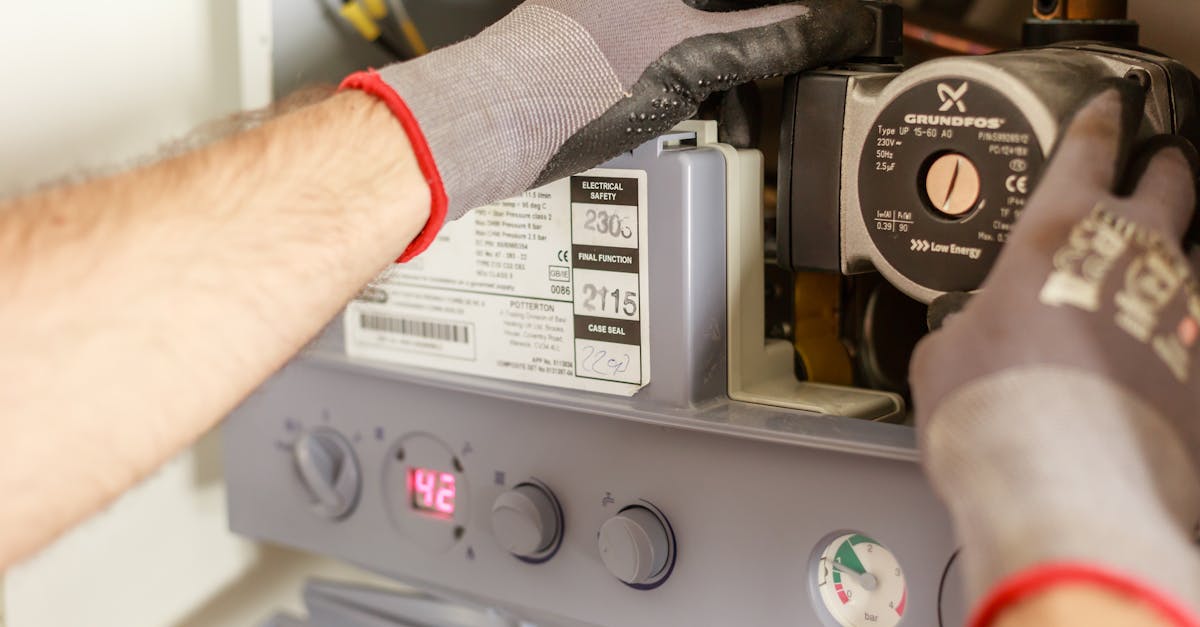
Types of Water Heaters — Comparison
Tank Water Heaters (Storage)
The conventional choice. A tank (typically 30–80 gallons) stores and heats water continuously, maintaining it at the set temperature. When hot water is used, the tank refills and reheats. Simple, reliable, and the least expensive upfront.
Best for: Households with predictable, consistent hot water usage. Budget-conscious buyers. Homes with limited gas/propane capacity (electric tank is an option). Replacement of an existing tank unit.
Tankless Water Heaters (On-Demand)
Tankless units heat water as it flows through the unit — no storage tank, no standby heat loss. They activate when a hot water tap opens and shut off when it closes, heating only the water you use.
Best for: Households with variable or high peak demand. Those wanting endless hot water (no tank to run out of). Homeowners looking to reduce energy bills long-term. Homes with limited space (tankless units mount on a wall).
Heat Pump Water Heaters (Hybrid)
Heat pump water heaters work like a refrigerator in reverse — they extract heat from the surrounding air and transfer it to the water. They're 2–3x more efficient than conventional electric resistance heaters. They still have a tank but use far less energy.
Best for: Homes in climates where the surrounding air is warm year-round (basements, garages in mild climates). Those wanting maximum efficiency and lowest operating costs. Households with access to a drain for the condensation that heat pump units produce.
Solar Water Heaters
Solar systems use rooftop collectors to heat water directly or through a heat-transfer fluid. They typically pair with a conventional tank for backup on cloudy days and during high demand. Significant upfront cost but extremely low operating costs in sunny climates.
Best for: Sun Belt homes with good solar exposure. Those with federal or state solar tax credits available. Long-term homeowners looking to minimize utility costs.
Condensing Water Heaters
Condensing tank water heaters capture heat from exhaust gases that would otherwise be wasted, making them significantly more efficient than standard gas tank units. They make sense when you have a gas boiler or when the return water temperature is low enough to allow condensing operation.
Best for: Homes with a gas boiler already. Those wanting gas efficiency without going tankless. Commercial applications with high hot water demand.
Water Heater Sizing Guide
Tank Sizing — How Many Gallons?
Size your tank based on household size and usage patterns:
| Household Size | Recommended Tank Size | First Hour Rating (FHR) |
|---|---|---|
| 1–2 people | 30–40 gallons | 40–50 gallons |
| 2–3 people | 40–50 gallons | 50–60 gallons |
| 3–5 people | 50–65 gallons | 60–75 gallons |
| 5+ people | 65–80+ gallons | 75–90+ gallons |
The First Hour Rating (FHR) — listed on every water heater's yellow EnergyGuide label — tells you how much hot water the unit can supply in the first hour of peak demand. Match it to your household's worst-case scenario (morning routine, multiple showers and laundry simultaneously).
Tankless Sizing — How Many GPM?
Tankless units are sized by flow rate (gallons per minute). Add up the flow rates of the fixtures you expect to use simultaneously:
| Fixture | Typical Flow Rate (GPM) |
|---|---|
| Shower | 2.0–2.5 |
| Kitchen faucet | 1.5–2.2 |
| Bathroom faucet | 0.5–1.5 |
| Washing machine | 1.0–2.0 |
| Dishwasher | 1.0–1.5 |
Example: A household that might run a shower (2.5 GPM) and a kitchen faucet (1.5 GPM) simultaneously needs a tankless unit rated for at least 4 GPM hot water output. Most families need 7–9 GPM for comfortable simultaneous use.
Gas vs. Electric Tankless
Gas tankless units produce higher flow rates (8–11 GPM for gas, typically 4–6 GPM for electric). If your household has high simultaneous hot water demand and your gas line has adequate capacity (you may need a gas line upgrade if it's undersized), gas tankless is usually the right choice.
Electric tankless units are simpler to install (no gas line, no venting) but produce lower flow rates. They're practical for smaller households or as point-of-use units for specific fixtures (a distant bathroom, a garage).
Water Heater Replacement Cost
| Type | Unit Cost | Installed Cost | Lifespan | Best For |
|---|---|---|---|---|
| Tank (40 gal, gas) | $400–$800 | $800–$1,400 | 8–12 years | Budget, consistent usage |
| Tank (50 gal, gas) | $500–$1,000 | $900–$1,700 | 8–12 years | Larger families |
| Tank (electric) | $350–$800 | $700–$1,300 | 8–12 years | No gas available |
| Tankless (gas) | $800–$1,500 | $1,500–$3,500 | 15–20 years | Endless hot water, efficiency |
| Tankless (electric) | $300–$800 | $1,000–$2,000 | 15–20 years | Small demand, easy install |
| Heat pump (hybrid) | $1,000–$2,000 | $1,500–$3,000 | 10–15 years | Maximum efficiency |
All installed costs include the unit, labor, permits (where required), old unit removal and disposal, and basic installation. Additional costs may apply for gas line upgrades, venting changes, electrical upgrades, orreroofing/re-piping.
What Affects Installation Cost Beyond the Unit
Gas Line Capacity
Tankless gas units require significantly more gas input (BTUs) than tank units. If your existing gas line is undersized for a tankless upgrade, a gas line upgrade adds $300–$1,000 to the project.
Venting Requirements
Tankless units typically require different venting than tank units — often direct vent (sealed combustion) rather than atmospheric vent. If the existing venting can't accommodate the new unit, re-routing or new venting adds $200–$800.
Electrical
Electric tankless units require a large dedicated circuit (often 120–200 amps at 240V). If your panel doesn't have capacity, a subpanel or service upgrade adds $500–$2,000.
Location and Accessibility
Units in cramped closets, crawlspaces, or high-up locations require more labor to remove and install. We quote based on the specific conditions of your installation.
Water Heater Brands We Install
We work with all major brands and recommend based on your specific situation, not brand margin. Brands we install regularly:
- Rheem / Ruud: Widely available, good warranty coverage, broad dealer network
- Bradford White: Commercial-grade quality in residential units, excellent for hard water areas
- A.O. Smith: Strong performer, wide range of models, good availability
- State / GE: Reliable entry-level and mid-range options
- Rinnai: Premium tankless, excellent reliability, industry-leading warranty
- Navien: High-efficiency tankless, excellent for cold-climate installations
- Noritz: Reliable tankless, good value, excellent build quality
- EcoSmart: Electric tankless specialists, good for point-of-use and electric-only homes
What Happens During Replacement
- Assessment: We confirm the replacement type and size, check gas/electrical/plumbing connections, and verify the installation location meets code requirements
- Permits: We pull any required permits and schedule any inspections
- Drain and remove old unit: We drain the old tank (if applicable), disconnect gas/electrical/plumbing, and remove the old unit from the premises
- Install new unit: We set and level the new heater, connect gas/electrical/plumbing, install new T&P valve and discharge pipe, and connect venting
- Fill and test: We fill the tank, check for leaks, light the burner (gas) or energize the elements (electric), and verify proper operation
- Customer walkthrough: We explain the new unit's operation, warranty, and maintenance schedule
Water Heater Maintenance — Protecting Your Investment
Once your new water heater is installed, annual maintenance extends its life significantly:
- Tank flushing: Drain 3–5 gallons annually to remove sediment. In hard water areas, flush every 6 months.
- Anode rod inspection: Check every 3 years; replace when depleted. This is the single most important maintenance item for extending tank life.
- T&P valve testing: Lift the lever once a year to verify it releases water. Replace every 5–7 years.
- Tankless descaling: Flush with vinegar or commercial descaler annually in hard water areas.
Annual maintenance ($100–$150) typically adds 3–5 years to a tank heater's lifespan and prevents most emergency failures.
Frequently Asked Questions
When should I replace my water heater instead of repairing it?
Replace if the heater is over 10–12 years old, the tank itself is leaking, you've had multiple failures recently, repair cost exceeds 40–50% of replacement, or you want to upgrade to a more efficient type. We give honest advice on every call — we make money on both repairs and replacements, so our recommendation is based on what's best for you.
Should I get a tank or tankless water heater?
Tank heaters are less expensive upfront ($800–$1,400 installed) and fine for households with predictable hot water usage. Tankless costs more ($1,500–$3,500 installed) but lasts 15–20 years, provides endless hot water, and reduces energy costs by 20–35%. If your gas line can support it and you want long-term efficiency, tankless is usually the better investment.
How much does a new water heater cost with installation?
40-gallon tank installed: $800–$1,400. 50-gallon tank installed: $900–$1,700. Gas tankless installed: $1,500–$3,500. Electric tankless installed: $1,000–$2,000. Heat pump installed: $1,500–$3,000. All include the unit, labor, permits, and old unit removal.
What size water heater do I need?
For tanks: 40 gallons for 2–3 people, 50 gallons for 3–5 people, 65+ gallons for 5+. Match the First Hour Rating (FHR) to your peak demand. For tankless: size by flow rate — most families need 7–9 GPM for comfortable simultaneous use of a shower and faucets.
How long does water heater installation take?
A straight tank-to-tank replacement takes 2–4 hours. Tankless installation takes 4–8 hours because it often requires new gas lines, venting, or electrical work. Heat pump units take 4–6 hours. Same-day completion is standard.
What brands of water heaters do you install?
We install all major brands: Rheem, Bradford White, A.O. Smith, State, Rinnai, Navien, Noritz, and EcoSmart. We recommend based on your home's requirements, not brand margin.